
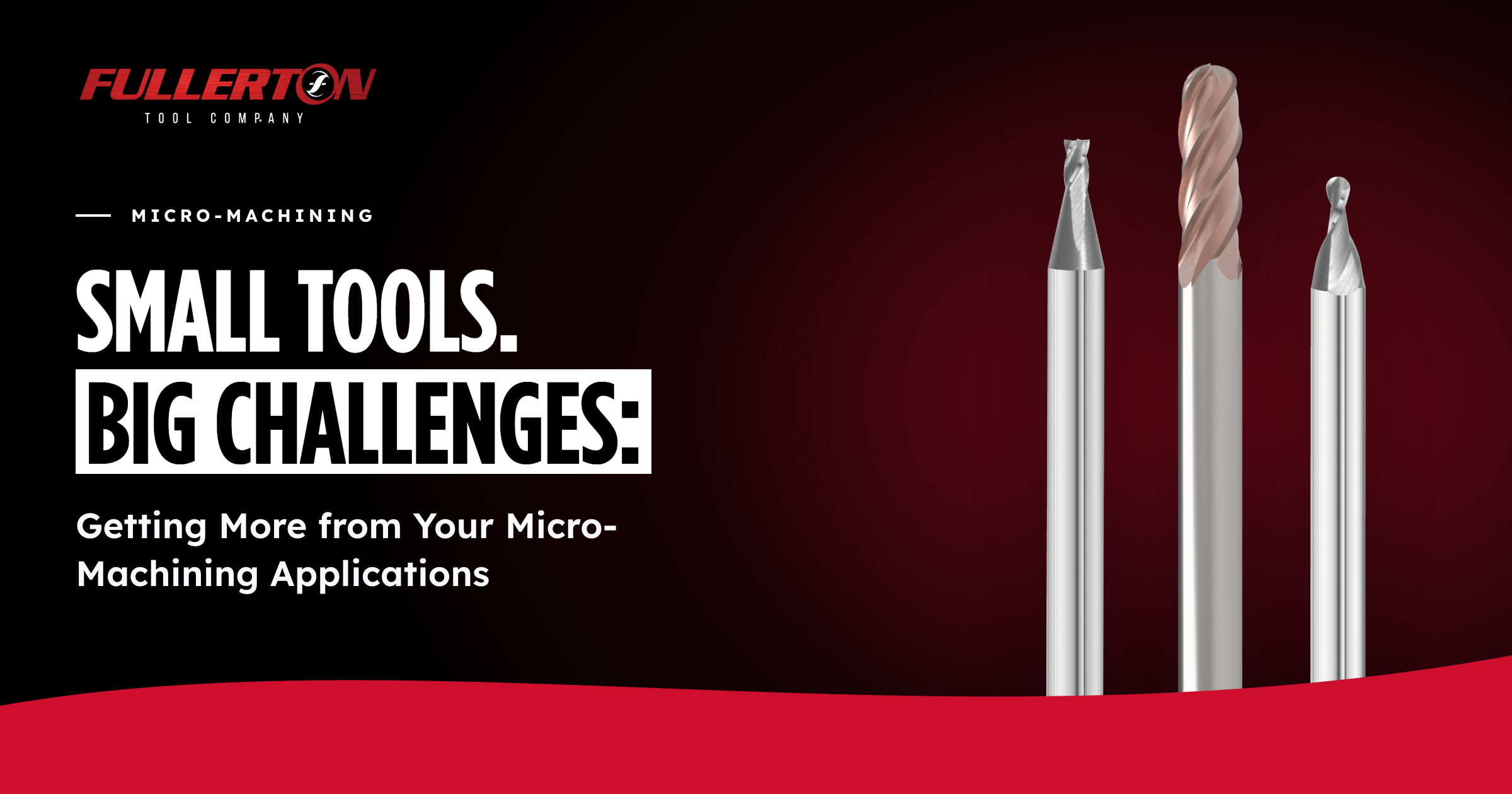
When every thousandth matters, the little things can make a BIG difference. From tool deflection to chip evacuation, here's what to watch for when working with micro end mills.
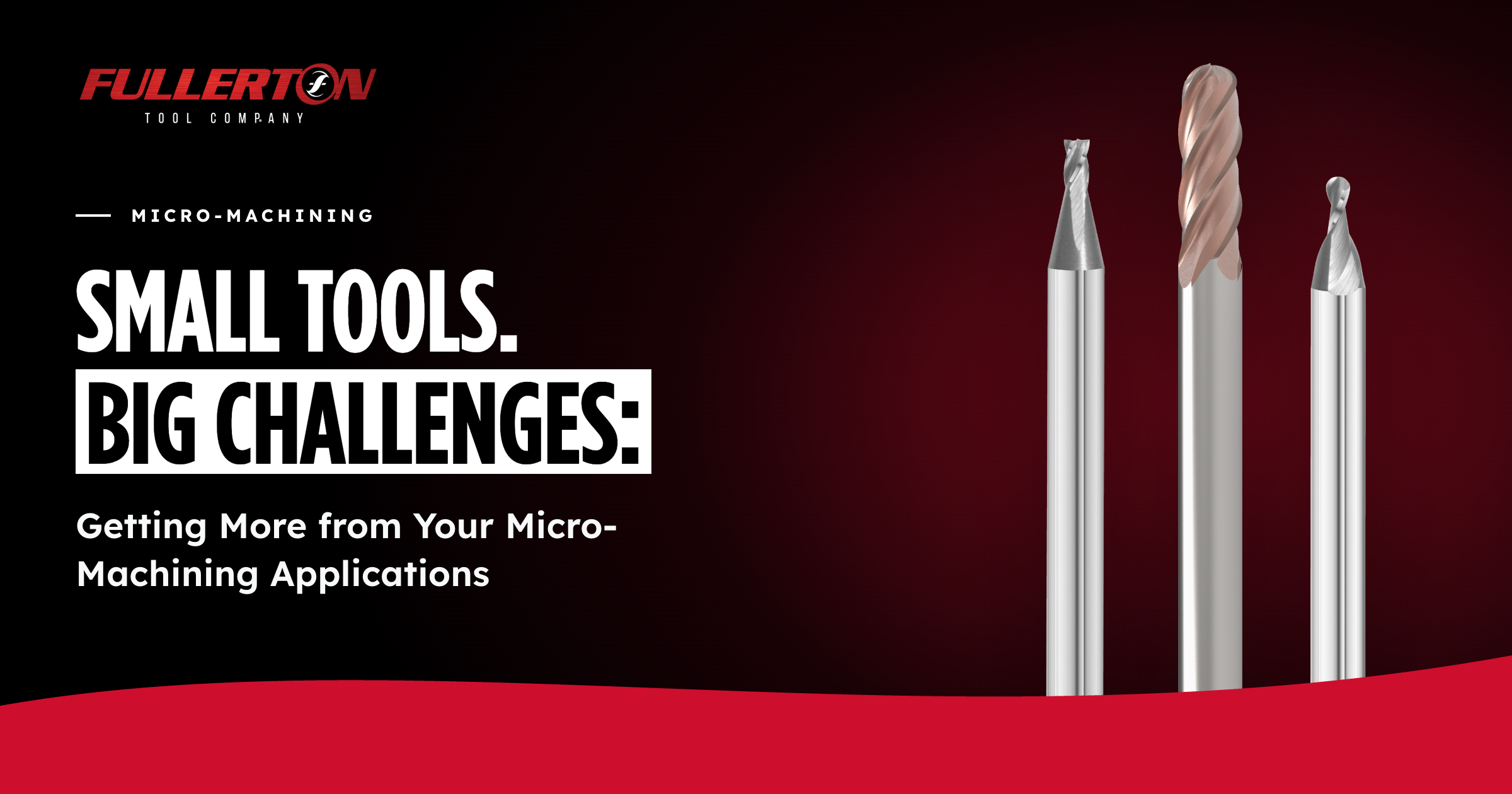 Micro-machining may involve smaller tools, but the challenges? They're anything but small.
When you're working with tiny diameters, intricate features, and tight tolerances, there's not much room for error. A little tool runout, a slight change in cutting conditions, or poor chip evacuation can quickly turn a precision operation into a frustrating one.
And while it might be tempting to treat micro-machining like conventional milling on a smaller scale, these applications often require a little more attention to detail.
The good news? Small adjustments can make a big difference.
Let's take a look at five things that can help you get better performance, longer tool life, and more consistent results from your micro end mills.
1. Runout: A Little Can Cause a Lot of Trouble
When you're working with a standard-sized end mill, a small amount of runout might not seem like a big deal. But when your tool diameter is measured in thousandths of an inch, that same amount of runout becomes a much bigger problem.
Excessive runout can cause uneven chip loads across the cutting edges, leading to premature wear, inconsistent finishes, and even tool breakage.
And nobody wants to hear that tiny snap halfway through a precision operation.
What can you do?
- Check toolholders and collets for wear or damage.
- Keep your spindle, holder, and tool shank clean.
- Measure runout as close to the cutting tool as practical.
- Use a high-quality toolholding system suited for precision machining.
Why it matters: The more consistently your cutting edges engage the material, the better your chance of achieving predictable tool life and machining results.
2. Tool Deflection: Keep it Short and Sweet
Micro end mills are small, which also means they can be more susceptible to deflection under cutting forces.
The farther a tool extends from its holder, the more opportunity there is for bending and vibration. That can make maintaining tight tolerances and consistent surface finishes a challenge.
What can you do?
- Use the shortest practical tool length for your application.
- Minimize tool overhang whenever possible.
- Choose a rigid toolholding setup.
- Evaluate cutting forces and adjust your machining strategy when needed.
Sometimes the solution isn't a different tool. It's simply giving the one you have a little more support.
Why it matters: Reducing deflection can improve dimensional accuracy, surface finish, and overall process consistency.
3. Chip Evacuation: Small Chips Still Need Somewhere to Go
Just because you're making tiny chips doesn't mean you can ignore them.
In micro-machining, chips can become trapped in small pockets, narrow slots, and intricate features. When those chips aren't cleared effectively, they can be recut, creating additional heat, tool wear, and potential damage to the workpiece.
Not exactly the kind of recycling we're looking for.
What can you do?
- Make sure chips have a clear path out of the cutting zone.
- Use properly directed air or coolant when appropriate for the material and application.
- Consider tool geometry and flute design when selecting your end mill.
- Evaluate your machining strategy to avoid unnecessary chip buildup
Why it matters: Effective chip evacuation helps reduce recutting and heat buildup, supporting more consistent tool performance.
4. Speeds & Feeds: Smaller Doesn't Always Mean Slower
It's easy to assume that smaller tools should always run at slower speeds and lighter feeds.
But micro end mills still need the right cutting conditions to do their job.
When feed per tooth becomes too small relative to the cutting edge, the tool may rub against the material rather than from a proper chip. That can generate unnecessary heat and accelerate wear.
On the flip side, pushing a micro tool beyond its capabilities can lead to excessive cutting forces and breakage
It's all about finding the right balance.
What can you do?
- Start with recommended cutting parameters for your specific tool and material.
- Pay attention to feed per tooth, not just the overall feed rate.
- Account for tool diameter, cutting-edge geometry, and machine capabilities.
- Make adjustments based on tool performance, surface finish, and chip formation.
Why it matters: Proper cutting parameters help maintain effective chip formation while controlling cutting forces and tool wear.
5. Tool Selection: Not All Micro End Mills Are Created Equal
When it comes to micro-machining, choosing the right tool can make a big difference.
Material, geometry, flute count, coating, and application requirements all play a role in how an end mill performs.
A tool designed for high-performance machining may be the right choice for one application, while a versatile general-purpose option may make more sense for another.
What can you do?
- Match the tool geometry to the material being machined.
- Consider coatings that support your application requirements.
- Evaluate flute count and chip evacuation needs
- Choose the appropriate tool diameter, length, and end configuration.
Why it matters: Selecting a tool designed for your application can help improve performance, reduce unnecessary wear, and achieve more consistent results.
What this Means for Your Micro-Machining Applications
Micro-Machining doesn't have to mean micro-managing every little detail, but it does require a thoughtful approach.
From runout and rigidity to chip evacuation and cutting parameters, each part of the process contributes to the final result.
And when you're working with tiny tools and tight tolerances, those little details add up quickly.
The biggest takeaway? Before assuming you need a different end mill, take a closer look at your setup, machining strategy, and cutting conditions. Sometimes a small adjustment can make a big improvement.
Small Tools. Big Challenges. We've Got Your Back.
When it comes to micro-machining, there's no such thing as a small detail.
From tool runout and deflection to chip evacuation and cutting parameters, even the slightest adjustment can make a big difference in performance, tool life, and part quality.
The good news? You don't have to figure it all out on your own.
At Fullerton, we're more than just a cutting tool manufacturer. Whether you're looking to improve tool life, troubleshoot an existing process, or find a better solution for a challenging application, we're here to help.
Ready to find the right tool for your next precision machining challenge?
Use our online Tool Search to explore cutting tools by diameter, material, and application requirements. Start your tool search!